Wednesday, March 17, 2021

Gardening Tip: Pruning Rabbitbrushes


Rabbitbrush shrubs need spring pruning.


Spring is almost here. The weather in Mother Nature’s Montrose Garden fluctuates between the chilly 40’s and pleasantly warm, although most nights hover around freezing. Some of the hardier shrubs are just beginning to leaf out.  One group of native bush Sunflowers – the Rabbitbrushes – are among the first.  And that means it’s time to prune them!

Several species of Rabbitbrush are native to the Four Corners states. We’ll feature a few as Plants of the Month in the coming year.  But in terms of pruning, the rules are pretty much the same.  Rabbitbrushes are pruned in early spring, when they begin to bud out – much like their cousins the Artemisias. And they are pruned quite substantially; also like some of the Artemisias.


Budbreak in Rabbitbush


In the wilds, bush Sunflowers like the Rabbitbrushes provide important winter browse for large animals like deer and elk, as well as smaller mammals (rabbits, ground squirrels, pocket gophers, etc.).  By late winter, plants are often severely eaten down by the wildlife. And, since The Rabbitbrushes and their native ‘pruners’ evolved together, Rabbitbrushes have developed the ability to grow back vigorously each spring.


Begin pruning Rabbitbrush the year after planting.


In fact, many native bush Sunflowers need a good pruning each spring. If they don’t get it, plants become woody, leggy – in short, less attractive than they should be. And pruning needs to begin in the first year after planting to keep a Rabbitbrush shrub full and lush (as they are in the wilds).


Rabbitbrush in early spring. Note green stems and sprouting buds.


Unlike some shrubs, Rabbitbrushes retain the ability to sprout from older wood. As shown above, even branches with a diameter of an inch or so are green; and buds can be seen below the cut.    This means you can prune a Rabbitbrush branch quite hard, as long as you leave at least four buds below the cut. 


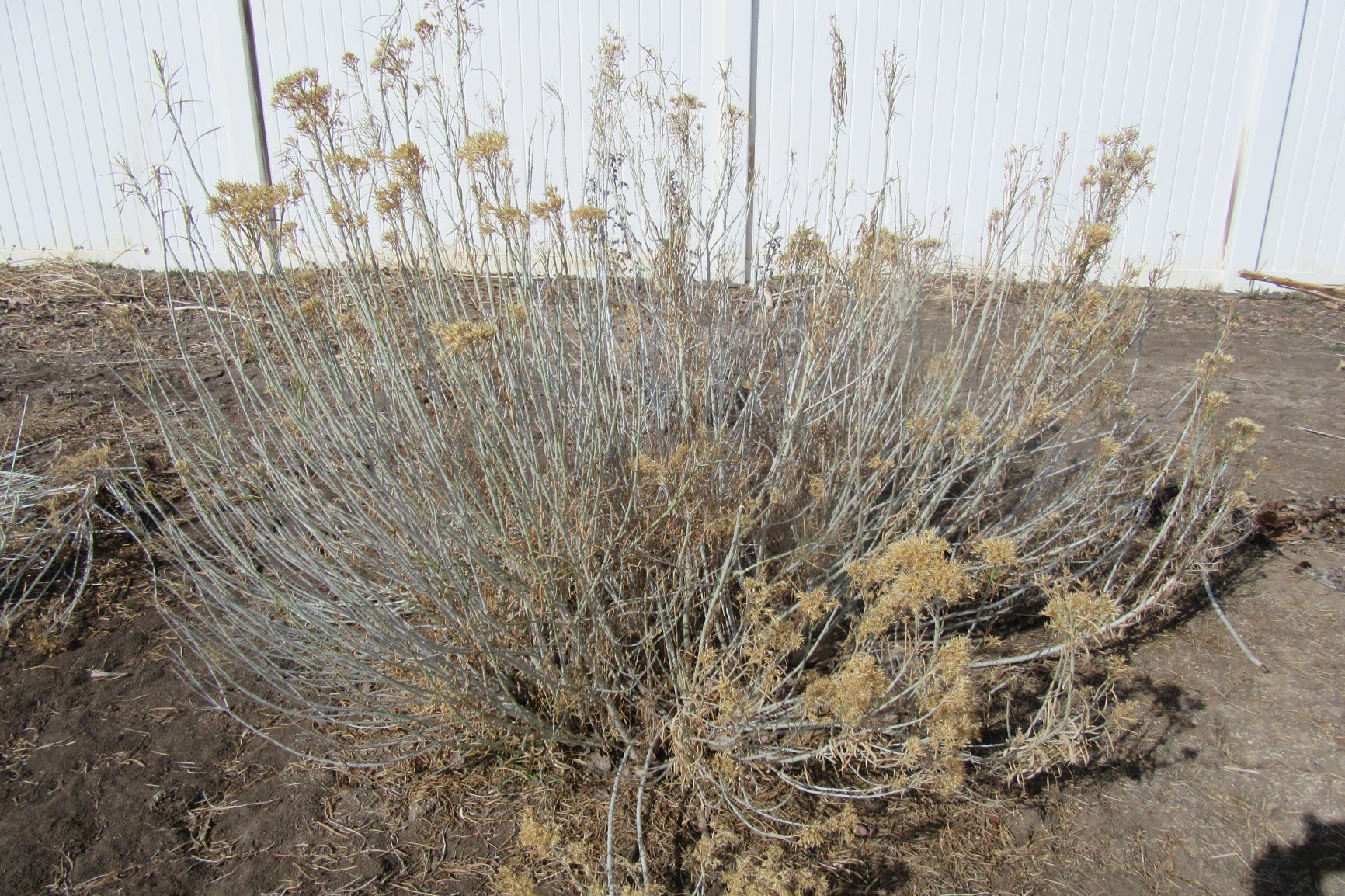
Rabbitbrush before spring pruning.


Above is a Rabbitbrush before pruning.  The shrub was left unpruned over the winter (you can still see remnants of flowers and old leaves).  In colder climates (we’re USDA Zone 6), old growth is left on the plants to protect them from winter chill.


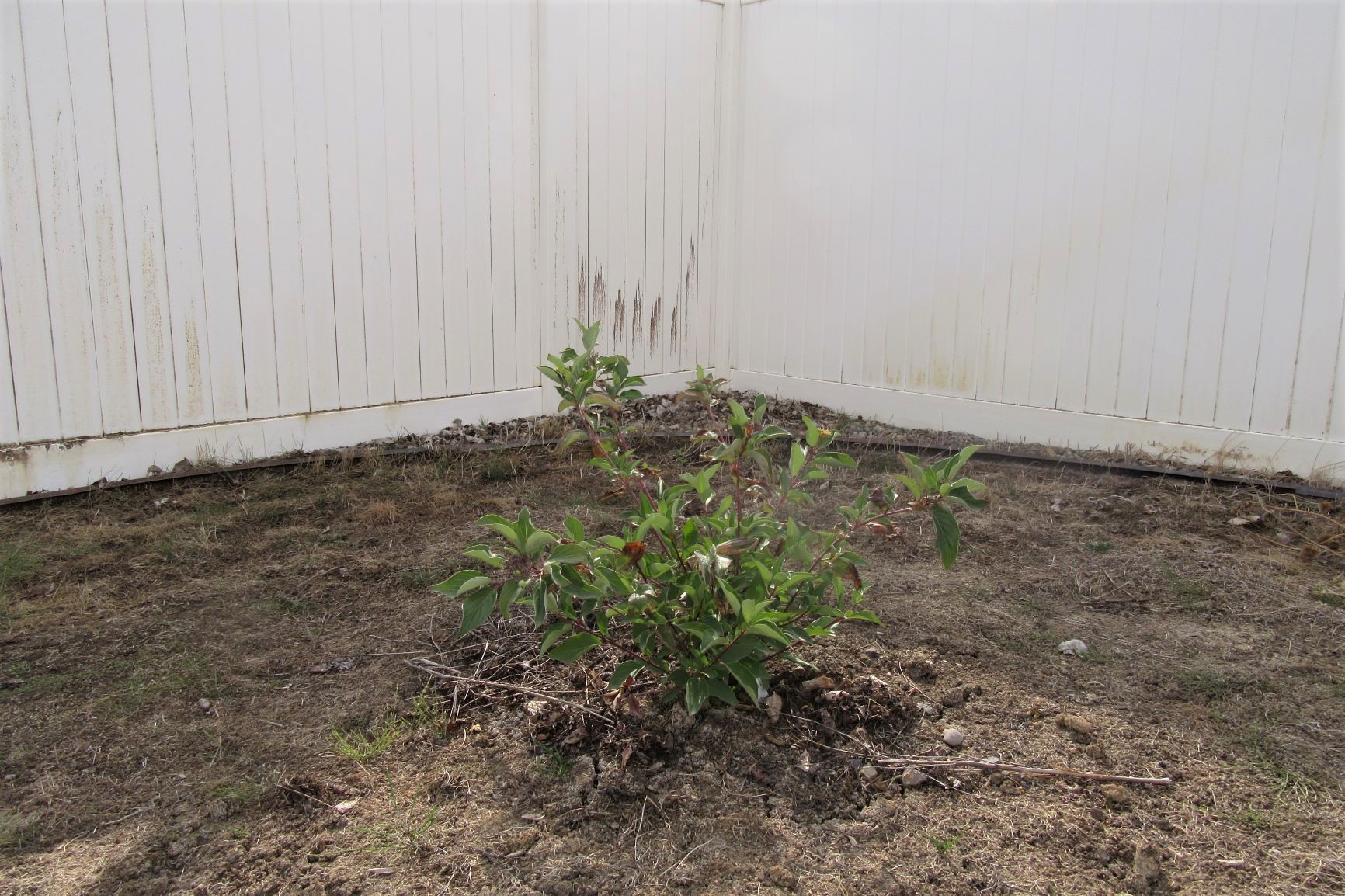
Partially pruned Rabbitbrush.


To give you an idea of our recommended pruning strategy, the picture above shows a plant that is half pruned.  You can see that quite a bit of mass – up to two-thirds of the branch length – can be removed, as long as there are heathy buds beneath.  The photo below shows a fully pruned bush.


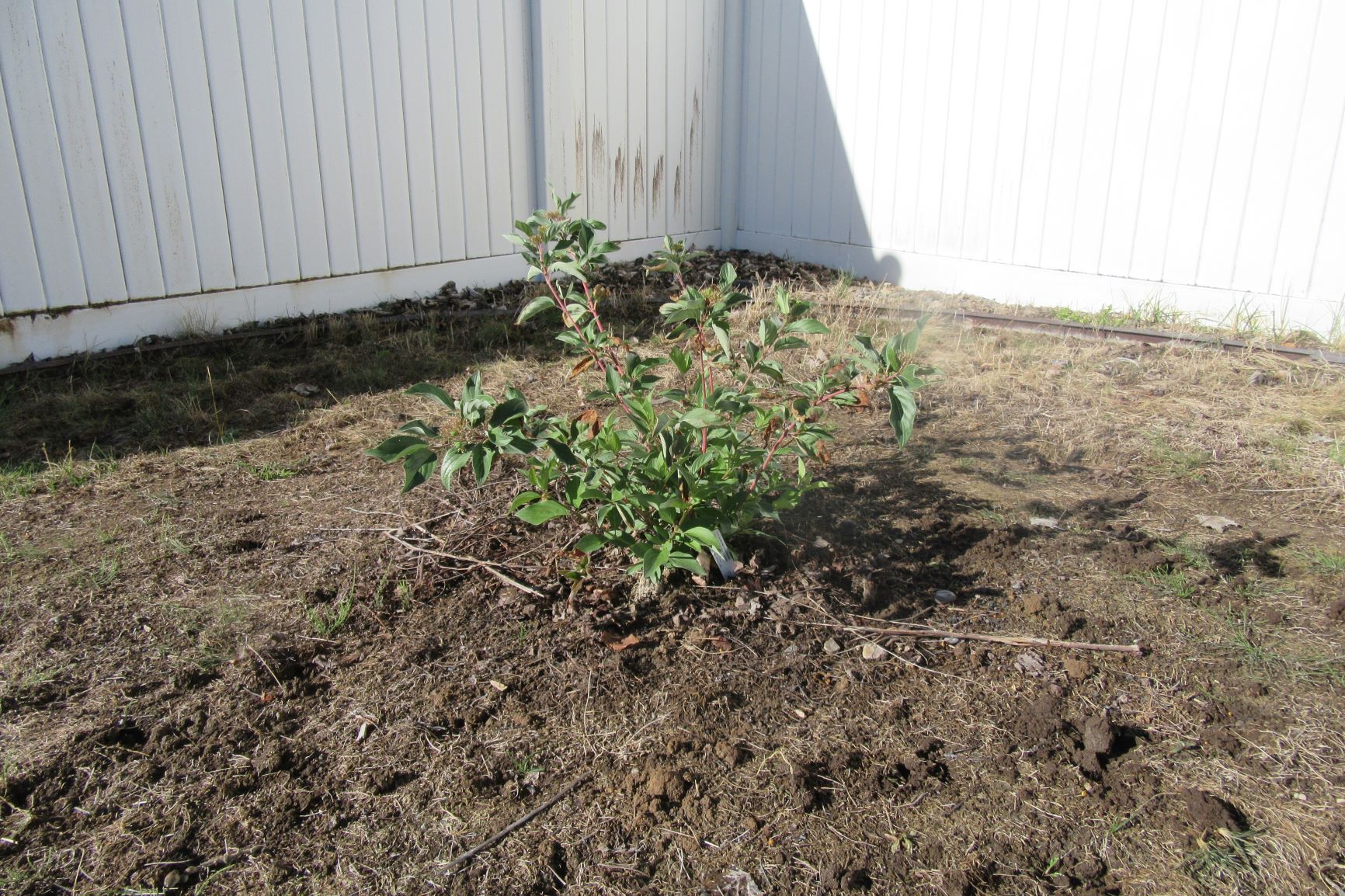
Fully pruning Rabbitbrush.


At this point we leave the prunings around the plant to protect it and conserve soil moisture.  When the trimmings are dry, we’ll cut them into smaller pieces and use them as mulch.  And that’s pretty much all there is to say about pruning Rabbitbrushes.


 _________________________________


We welcome your comments (below).  You can also send your questions to: monaturesmontrosegarden@gmail.com


Wednesday, March 3, 2021

Plant of the Month (March) : Meadow onion – Allium unifolium


Meadow Onion (Allium unifolium): late spring

There’s not much going on in our Zone 6 garden in early March. But some of the bulbs we planted last fall are starting to break ground, including Allium unifolium. So we decided to feature this lovely true bulb as our Plant of the Month.  The scientific name is pronounced: AL-ee-um  yu-nee-FOE-lee-um.

The Meadow onion is not native to Colorado.  It grows along the Central and Northern coast of California, from San Luis Obispo County into Oregon, and also in Baja California.  It grows in moist, often grassy areas on coastal cliffs in the coastal pine and mixed evergreen forests.  It tolerates moist soils and is most comfortable in clay.  These two preferences make it a good choice for many gardens.


Meadow Onion (Allium unifolium): bulbs


Allium unifolium is a true onion (genus Allium), a cousin to our culinary onions and garlic.  The onions were formerly included in a large bulb-forming family, the Lilliaceae.  Some taxonomists now recommend placing the onions in their own family, the Alliaceae. Others place the onions in the Amaryllis Family (Amaryllidaceae), along with such garden genera as Agapanthus, Amaryllis, Clivia, Narcissis and Zephyranthes.   Only time will tell where the Alliums will end up.

Colorado has about ten different species of native Alliums.  The vast majority grow on the Western Slope, usually above about 5000 ft elevation.   Six are native to Montrose County but most are difficult to find, even as seeds. Fortunately for Western gardeners, some non-local species can succeed in local gardens – if only you can find a source for the bulbs!   Fortunately, Allium unifolium is available even from some traditional bulb growers like Van Engelen Inc. (it’s a favorite in European gardens!).


Meadow Onion (Allium unifolium): early spring


Like most Alliums, Meadow onion is a fairly simple perennial.  Its leaves emerge from the bulb with the late winter rains.  We often see them start to emerge in February in our garden.  The leaves are the simple, strap-like leaves of the onions.  The genus name unifolium mean ‘single-leaf’; in fact, another name for this plant is the One-leaf onion.  As seen above, plants are indeed sparsely leaved (one to four leaves is typical).


Meadow Onion (Allium unifolium): flower bud


The leaves often start to wither from the tips (and sometimes wither altogether) before the flowers emerge.  Meadow onion blooms in spring or early summer: usually April or May, but a bit later in colder climates.   The flowers grow in dense clusters (umbels) on 1-2 foot (30-45 cm) flowering stalks. If you live in a dry place like much of Western Colorado, the flowering stalks may be a little shorter.  The buds are tightly packed in a membranous sheath (see above) at the tip of the growing flower stalk.   The stalks grow very quickly to their full height.


Meadow Onion (Allium unifolium): floral cluster


Meadow onion has the star- or bell-shaped flowers typical of the onions.  The six veined ‘petals’ are actually tepals (petals and sepals look alike).  The flowers are individually small (about ½ an inch across), but with 15 or more flowers per umbel, this onion is a showy bloomer.  The flower color is most often a pale lavender or pale pink, though white-flowering forms are known. 


Meadow Onion (Allium unifolium): flowers


The flowers contain both male and female parts (‘perfect’ flowers).  The pollen in this species is either gray or yellow.  The plants produce seeds in our garden, so they do attract some insect pollinators with their mildly sweet aroma.  While the literature specifies bees as pollinators, we more often see the flower flies (below).


Meadow Onion (Allium unifolium): flowerfly (pollinator)


Allium unifolium is easy to grow.  It can be grown in just about any soil, although it prefers the moisture-retaining clays.  It needs a neutral to alkali soil (pH 7.0-9.0). While it grows in full sun in Oregon, gardeners in warmer climates should plant this species in part shade (afternoon shade to fairly shady).  This plant does need good winter/early spring rains.  We sometimes have to supplement ours in dry winters.  Unlike some native bulbs, this species can take occasional summer water.

We let our plants go to seed, then let them self-seed naturally (or spread them where we want to start a new patch).   Patches increase slowly both by seed and by offsets (new little bulbs).  A modest investment in bulbs will increase to a nice grouping within 4-5 years.  We like to start out by planting 8-10 bulbs within a 2 square foot area.   Don’t worry about critters digging up the bulbs – they tend to leave onions alone. For more on planting bulbs see: https://mothernaturesmontrosegarden.blogspot.com/2020/10/gardening-tip-planting-native-flower.html


Meadow Onion (Allium unifolium): in garden


We love the flowers of this onion.  The color contrasts nicely with native grasses and wildflowers.  It’s great for brightening shady areas of the garden, for example, under trees.  The plants naturalize nicely, and can help ‘tie together’ parts of the garden with their pastel leaves and flowers. 

Bulbs are a perfect choice for bordering pathways, as an accent plant in a rock garden or along a garden wall. Meadow onion’s flowers have a light, sweet fragrance, making them a good choice for containers near seating areas and as cut flowers.  This bulb would do well around the drier edges of a vegetable garden or in an herb garden.  Native Californians did not eat it; however, at least one blogger uses the stems as a flavoring agent [ref. 1, below].


Meadow Onion (Allium unifolium): with other wildflowers


So why include Meadow onion in your garden?  First, it’s easy to grow and available from bulb dealers.  Second, it’s a little charmer that’s adaptable to garden challenges like clay soil and a bit of shade.  Thirdly, it provides an economical solution to providing masses of spring color – or to naturalize.

If you desire, Allium unifolium can be used as a flavoring agent.  The flavor is similar to that of garden onions – perhaps even better. All parts are edible, including the flowers (in a salad or as a garnish), leaves, flowering stems and bulb. Consider growing this in the vegetable garden, along with your chives or garlic-chives.  

And finally, Meadow onion has all the magic of a native perennial bulb.  It gives you something to look forward to, without much care, year after year.  It’s a seasonal treat, anticipated and enjoyed, that ties us to the land and its seasons.  We echo many previous garden mavens, in singing the praises of garden bulbs.


For more on gardening with native bulbs see: https://mothernaturesmontrosegarden.blogspot.com/2020/10/gardening-tip-planting-native-flower.html


For a gardening information sheet see: Co gardening sheet allium unifolium (slideshare.net)

For more pictures of this plant see: http://www.slideshare.net/cvadheim/allium-unifolium-web-show

For plant information sheets on other Western native plants see: http://nativeplantscsudh.blogspot.com/p/gallery-of-native-plants_17.html


________________

  1. http://lilliehouse.blogspot.com/2015/06/permaculture-plants-allium-unifolium.html

__________________________________________________________


We welcome your comments (below).  You can also send your questions to: monaturesmontrosegarden@gmail.com


Saturday, February 6, 2021

Plant of the Month (February) : Purple Coneflower – Echinacea purpurea


Purple Coneflower (Echinacea purpurea): plants in winter

February can be unpredictable in the Four Corners region. Weather can go from warm and sunny to cold and snowy very quickly. Making the garden look good this time of year can be a challenge. Plants that provide structural interest, even in winter, are a welcome solution. One such plant is the Purple Coneflower or Echinacea purpurea.  The scientific name is pronounced eck-kin-NAY-see-uh  pur-PURR-ee-uh.

Purple coneflower was probably never native to Colorado, although it does grow in neighboring Kansas.  This is really a wildflower of the eastern, southeastern and midwestern United States. It grows wild in prairies and open woodlands from Florida to the Canadian Province of Ontario.  It is commonly known as Purple Coneflower, Eastern Purple Coneflower, Hedgehog Coneflower and Echinacea.


Purple Coneflower (Echinacea purpurea): in Sunflower family.


Purple coneflower is a member of the Sunflower family (Asteraceae).  It was originally named Rudbeckia purpurea by Linnaeus in 1753. [1]   It was reclassified as Echinacea purpurea in 1794, so this species has been known to the scientific world for some time.   And it has long been used in gardens, although its popularity has greatly increased since the 1990’s, when it became more readily available.

Why plant a non-native sunflower in Western Colorado, particularly in a garden with a preponderance of Colorado and Western plants?  For several reasons, including its aesthetic characteristics, hardiness, un-fussy growth requirements and ease of propagation.  All of this make Echinacea purpurea a popular garden plant on the Western Slope.


Purple Coneflower (Echinacea purpurea): growth habit


Purple coneflower is an herbaceous perennial that common grows 2-4 ft. tall by 1-2 ft. wide (up to a meter tall by 25-30 cm). The foliage is somewhat coarse/bold in appearance (it is, after all, a sunflower). The stems are stiff and upright.  The largest leaves are low on the stems (5-12 inches long; 2-5 inches wide), simple and alternate, often with toothed margins (below).  The foliage is dark green, sometimes even tinged with purple.  The darker foliage contrasts nicely with many local shrubs that have silvery or blue-green foliage.


Purple Coneflower (Echinacea purpurea): foliage


Echinacea purpurea is a long blooming species, with the exact bloom period depending on the local climate.  In milder areas, it may bloom as early as April.  In our part of Western Colorado, it’s mainly a summer through fall bloomer, with heaviest blooming in early summer and late summer/early fall.  The long bloom period is another reason for this species popularity.


Purple Coneflower (Echinacea purpurea): flower (close-up)

The flowers of Purple coneflower exhibit the basic characteristics of the Asteraceae.  Flowers are clustered in ‘sunflower heads’, with lighter-colored ray flowers and darker disc flowers to the center (above).  The ray flowers are most typically purple or lilac, but may be white or pink.  The disc flowers cluster on a dome-shaped disc, which may be nearly flat to almost spherical.  The disc flowers, which are yellow or orange, produce the seeds (ray flowers are sterile). 


Purple Coneflower (Echinacea purpurea): pale flowered variant.

We’ve noticed quite a bit of floral variability in the offspring of several plants we purchased last year.  Most have purple ray flowers (like the parents), but some have white rays and others lighter lilac-colored rays. Some have rays that are strongly recurved; others almost straight. Some have barely any ray flowers at all.   And all this from three purchased plants with ‘typical’ purple flowers! 


Purple Coneflower (Echinacea purpurea): white-flowered variant


The natural variability of the species facilitates the development of cultivars with special characteristics. Cultivars such as 'White Swan' and ‘PowWow White’ have white flowers; 'Magnus' has bigger, flatter, purple rays, and ‘Ruby Star’ ('Rubenstern’) has darker, more recurved rays.  We suspect some hanky-panky produced the plants we purchased as the straight species!  And while we’re on the subject of cultivars, 'Kim's Knee High' and ‘Prairie Splendor’ are shorter plants (less than 2 ft.) with classic rose-purple flowers.  So, there’s something for every taste and requirement (unless you simply don’t like sunflowers).


Purple Coneflower (Echinacea purpurea): easy to grow


Purple coneflower is easily grown in gardens from USDA Zones 3 to 8.  It’s not particular about soil texture or pH (except very acidic soils). While usually grown in full sun, it tolerates part-shade.  It’s a good bet for hot, dry sites, thriving on average or somewhat dry soils (our Water Zones 2 and 3 – see  https://www.slideshare.net/cvadheim/water-zone-gardening).  But it’s not picky about water needs; it can take regular water.


Purple Coneflower (Echinacea purpurea): seedlings around mother plant


Echinacea purpurea is not a particularly long-lived perennial, at least not in Mother Nature’s Montrose Garden.  However, it does re-seed nicely – perhaps even too much so.  If you need to contain it, deadhead to prevent the seeds from maturing. On the other hand, the seeds serve as a good source of winter food for seed-eating birds.  And the bare seed heads add interest to the winter garden.

We don’t cut our Coneflowers back until spring.  Not only do perennials like Echinacea provide winter color. But retaining the old foliage helps the plants survive cold winter weather.   So, we wait until the spring warm-up to cut back the dead perennial foliage.  


Purple Coneflower (Echinacea purpurea): seeds provide winter food for birds


The reasons to include Purple coneflower in a garden are many.  If you’re into habitat gardening, this species provides needed seasonal food. In addition to the seeds, the flowers provide nectar and pollen for a range of pollinators including native bees, hummingbirds and butterflies. The foliage also provides larval (caterpillar) food for the Silvery Checkerspot Butterfly and several species of moths.


Purple Coneflower (Echinacea purpurea): medicinal plant


The medicinal gardener will recognize Echinacea purpurea as a medicinal plant. In fact, extracts of Echinacea root are widely sold, with claims that they boost immunity.  Some studies do suggest that secondary metabolites produced by Echinacea species stimulate production of certain immune cells. [2]  The species has a history of use treating many ailments, particularly those with an infectious component.  At any rate, the flowers can be used to make a soothing tea, which may have beneficial effects.  As always, herbal medicines should be used in moderation, and only after consulting your healthcare provider.


Purple Coneflower (Echinacea purpurea): makes a good filler plant
 while shrubs are growiing


The most common reasons for planting Purple coneflower are its pretty flowers, long bloom season and modest care requirements.  The species is a good choice for filling in bare spots in the garden, particularly in a garden with new shrubs. It naturalizes nicely if allowed to do so.  And the flowers make attractive, long-lasting cut flowers.


Purple Coneflower (Echinacea purpurea): showy flowers make this
 a popular perennial.


Purple coneflower is showy when massed. It is a widely recognized and acceptable wildflower; a useful complement to shrubs and lawn, even in front yards.  Its hardy constitution makes it suitable for harsh conditions along curbs and walkways. It can be used in a naturalistic or cottage garden, prairie/meadow garden or traditional flower bed. 


Purple Coneflower (Echinacea purpurea): dark foilage contrasts
 nicely with silvery native shrubs.


The relatively dark green foliage looks good with many silvery-foliage native shrubs and sub-shrubs.  The purple flowers make a lovely contrast, particularly with yellow-flowered sunflowers and white flowered species. Try pairing it with such natural associates as Coreopsis major, Rudbeckia hirta, Monarda fistulosa, Liatris spicata, Schizachyrium scoparium and Andropogon species for a prairie garden.

In summary, while not a Colorado native plant, Purple coneflower has many useful attributes. It’s readily available – both as plants and seeds. There are cultivars with specific properties.  And it looks nice with relatively little maintenance.  That’s probably why it is seen so commonly in local gardens.  Could you use a plant or two in your garden?


Purple Coneflower (Echinacea purpurea): a good choice for Western Colorado gardens.


For a gardening information sheet see: Gardening sheet echinacea purpurea (slideshare.net)

For more pictures of this plant see:

For plant information sheets on other native plants see: http://nativeplantscsudh.blogspot.com/p/gallery-of-native-plants_17.html

_______

  1. https://en.wikipedia.org/wiki/Echinacea_purpurea
  2. Manayi A, Vazirian M, Saeidnia S (2015). "Echinacea purpurea: Pharmacology, phytochemistry and analysis methods". Pharmacognosy Reviews. 9 (17): 63–72. doi:10.4103/0973-7847.156353. PMC 4441164. PMID 26009695.


We welcome your comments (below).  You can also send your questions to: monaturesmontrosegarden@gmail.com

Saturday, January 23, 2021

Gardening Tip: Giving Seeds Their Winter Chill Outdoors


Seeds that require winter chill can be planted out in winter or early spring.

Growing plants from seed has several advantages. It can be an enjoyable hobby, allowing you to appreciate all stages of a plant’s life. It is often less expensive than buying plants.  And for some native species, growing from seed can be the only option.

Seeds of many woody and perennial plants from colder climates need winter chill exposure in order to germinate. The need for chill is usually noted on the seed packet, along with other planting instructions.  Some seeds also benefit from environmental alternations of warmer and colder temperatures.  Giving such seeds a natural exposure in winter or early spring can be a good option.

We like to start our woody trees and shrub seeds in 1-gallon containers.  Those that need winter chill are planted and set out in a sheltered area of the garden in January (above). In our unpredictable climate, we check the pots every few days to be sure they aren’t drying out, watering as required.  That’s really all we do until spring warm up, when pots are moved to our shade structure.


Pots are moved to the shade structure in spring.


 ____________________________


We welcome your comments (below).  You can also send your questions to: monaturesmontrosegarden@gmail.com


Monday, January 4, 2021

Plant of the Month (January) : Redosier Dogwood – Cornus sericea


Redosier dogwood (Cornus sericea): provides good fall color!


We’re truly experiencing winter this time of year; snows have turned Mother Nature’s Montrose Garden into drifts of white. Pretty, but perhaps a little too monochromatic!  When brightening up a winter garden, plants with interesting shapes and colorful bark can be a godsend.  And our Plant of the Month, Redosier dogwood, is one of the best for colorful bark.  The scientific name is pronounced KOR-nus  sir-IH-see-uh.

Redosier dogwood has gone by many names through the years.  Some common names are American dogwood; Red willow and Red brush; Red, Redstem or Red-twig dogwood; Creek, Rose, Silky, California, Western or Poison Dogwood;  Waxberry, Red-osier and Red-stemmed Cornel; Red Rood; Harts Rouges; and Dogberry Tree. 

The species has also been given a number of scientific names, including Cornus alba, Cornus baileyi, Cornus instolonea, Cornus interior, Cornus stolonifera, Swida instolonea, Swida stolonifera and Swida sericea.  Subspecies and varieties have also been proposed for many of the above.  For example, the Redosier dogwood of Western Colorado was formerly known as Cornus stolonifera var. coloradensis.  Taxonomists now lump all the above into the species Cornus sericea, with two subspecies: Cornus sericea subsp. sericea (the more common form) and Cornus sericea subsp. occidentalis (limited to WA, OR and CA).

Why so many names?  Perhaps one reason is because type specimens were collected over a relatively long period of time (Linnaeus named some in the 1700’s). Another reason is the broad species range, extending over much of North America (with the exception of the southeastern and southern plains states). Not surprisingly, morphologic (appearance) variants occur across this extensive range. This is yet another factor responsible for the different species, subspecies and varietal names.

The last point has some relevance for those desiring a Redosier dogwood appropriate for their local area.  Several reasons support choosing locally-sourced plants.  First, they have the appearance of the local, wild-growing type and so ‘look appropriate’.  Second, they may be better suited to local growing conditions than those from distant source plants.  Finally, planting locally-sourced plants helps support the nurseries that grow and sell locally-native plants.


Redosier dogwood (Cornus sericea): young plant


Redosier dogwood is an upright, woody, winter-deciduous shrub.  If you live in the West, you’ve likely seen it growing along creeks and other moist places at higher elevations. It generally reaches heights of 6-10 ft [2 to 3 meters], though in some parts of the country it may grow to 12-20 ft.  In Colorado, our native variants are in the 6-8 ft. range.

Cornus sericea is a clump-forming shrub, sending out new shoots from the ground and attaining a width of 8-10 ft. or more.  The bark and twigs are a lovely bright red to burgundy in late fall and winter.  It is the bark and growth habit that make this plant a valuable winter color source in the garden.


Redosier dogwood (Cornus sericea): foliage


From spring to fall, Redosier dogwood is an attractive, bright-green shrub. The leaves are simple, opposite and oval to oblong in shape (above). In some variants, the leaves may be up to 4 inches long; in Western Colorado, the leaves are closer to 2 inches. The leaves are darker above and lighter beneath due to plant hairs (trichomes).  The leaves turn shades of yellow, red or purple in fall, with fall colors varying by plant and yearly weather.  In terms of its foliage, this shrub is pretty in spring-summer, but spectacular in fall-winter. 


Redosier dogwood (Cornus sericea): fall foliage


But that’s not all….   Cornus sericea is, after all, a Dogwood.  And Dogwoods are known for their attractive flowers.  Redosier dogwood is not the showiest species, but it does produce sprays of lovely white flowers from June to August (or even into September with a little water).  The flowers grow in dense, flat-topped clusters (technically called cymes). The flowers themselves are small - 0.08-0.12 inches (2-3 mm) – with four petals typical of the Dogwood family (below).  The color ranges from bright white to creamy-white, and the flowers are sweetly scented. 


Redosier dogwood (Cornus sericea): flowers

Redosier dogwood (Cornus sericea): young fruits


The flowers attract many types of pollinators, from native and Honey bees, to butterflies, moths and flower flies.  The resulting fruit is a small (1/4 to 1/3 inch) berry (technically a drupe) with a large seed.  The fruits start green, maturing to white or a light blue (the Colorado variants are bluish). The fruits remain on the shrub into winter, providing a cold-weather source of food for fruit-eating birds.

All in all, Redosier dogwood is an excellent habitat shrub, with the pollen and nectar just the beginning.  The fruits attract a wide variety of birds, including bluebirds, catbirds, finches, flickers, flycatchers, grosbeaks, kingbirds, magpies, mockingbirds, orioles, robins, European starlings, tree swallows, tanagers, thrushes, vireos, pine warblers, cedar waxwings and woodpeckers. Game birds who eat both the fruits and buds include grouse, ringnecked pheasants, band-tailed pigeons, greater prairie chickens, quail, and wild turkeys. [1] In addition, the dense foliage provides excellent nesting sites for birds.


Desert Cottontail: one of many mammals that
 eat 
Cornus sericea

In the wild, Cornus sericea fruit and foliage are eaten by black bear, beaver, rabbits, raccoons, skunks, squirrels, chipmunks and other smaller mammals. Deer, elk, Mountain goat, and moose also browse the twigs and foliage.  [2]   And where ever it grows, people have made use of Redosier dogwood.

The fruits are tart and can make you sick if eaten in large quantities.  None-the-less, they were traditionally used as a relish or dried and eaten – alone or mixed with sweeter berries.  The plant also has a history of use as a natural medicine, although the uses seem less specific than for many other medicinal species. [3-5]  Both the bark and leaves were sometimes used for smoking, often mixed with native tobaccos.

The branches of Cornus sericea were traditionally used to make a number of useful products and utensils including toothbrushes, bows and arrows, digging sticks, pipe stems, drumsticks, tipi stakes and pins, slingshots, weaving shuttles, cooking and drying racks, and kettle hangers. The species was widely used in basket-making, and is still gathered for this use today.  The bark retains its red color if collected in spring and different bark colors were often utilized in basketry patterns.  The bark can also be used as a dye-stuff.


Redosier Dogwood (Cornus sericea): plant where it
has room to grow.


Redosier dogwood is fairly easy to cultivate in the garden.  It grows in USDA Zones 2-8 and tolerates many soil textures.  It can be grown in soils with pH 5.0 to 8.0, though it probably likes neutral soils best.  And plants tolerate full sun to part-shade.

They do like water and grow best in soils that are saturated at least part of the year. But warm, moist weather can promote fungal diseases; drier climates or planting in an area with good air circulation is recommended.  Once established, Cornus sericea can get by on deep weekly summer water – perhaps even less in denser soils.  It actually does better if soils are left to dry out in late summer and fall, mimicking natural seasonal conditions.


Redosier Dogwood (Cornus sericea): flower buds


Redosier dogwood requires only minimal maintenance.  This species is a spreader, so plant it where it can expand a bit.  If shoots appear where unwanted, cut them off at the root with a sharp shovel.    Routine pruning is not necessarily required.  But removal of the oldest 20% of stems in early spring (cut back to the ground) promotes good winter color.  Alternatively, the entire plant can be cut to the ground (coppiced) every 3 to 4 years to rejuvenate.  Either of these methods keeps the plant healthy as well as attractive.   The goal is to mimic the natural ‘pruning’ done by animals in the wild.


Redosier Dogwood (Cornus sericea): fall leaf color


So, why consider Cornus sericea for your home garden?  First, it’s a wonderful habitat plant, providing food, shelter and nesting sites for a wide range of creatures. It’s also the perfect shrub for places that stay a bit moister than the rest of the garden – perhaps on the north side of a fence or building.  If you have a stream or pond, Redosier dogwood will be right at home there.  It also works in a rain garden or infiltration swale, and does a nice job of stabilizing slopes and banks.  

Redosier dogwood makes a nice hedge or hedgerow shrub, with its green foliage, fragrant flowers and fruits.  It’s prized for winter color, often when contrasted with evergreen shrubs such as junipers.  Or pair it with its natural associates: aspen (Populus tremuloides), birch (Betula spp.), Wood's rose (Rosa woodsii), wild currants and gooseberries (Ribes spp.), hawthorne (Crataegus spp), maples (Acer species), ash (Fraxinus species), Western sycamore (Platanus racemosa), cottonwood (Populus species), willow (Salix species), wild honeysuckle (Lonicera species) and wild grape (Vitis species)  

If you are a basket-maker or twig artist, several Cornus sericea shrubs will supply you with materials every year. You might even want to put the wood to some of its traditional practical uses!

If you need an Cornus sericea with specific characteristics (size; leaf size; bark color) there are a number of cultivars available from traditional shrub nurseries.  So the only question is: do you have a place for this lovely native shrub?


For a gardening information sheet see: Gardening sheet cornus sericea (slideshare.net)

For more pictures of this plant see: coming in 2021

For plant information sheets on other Western U.S. native plants see: http://nativeplantscsudh.blogspot.com/p/gallery-of-native-plants_17.html

________________

  1. https://plants.usda.gov/plantguide/pdf/cs_cose16.pdf
  2. https://mpgnorth.com/field-guide/cornaceae/red-osier-dogwood

3.       https://medivetus.com/botanic/cornus-sericea-red-osier-dogwood-medicinal-uses/

4.       Harrington, H. D. 1967. Edible native plants of the Rocky Mountains. University of New Mexico Press, Albuquerque, New Mexico.

  1. Kershaw, L. 2000. Edible and medicinal plants of the Rockies. Lone Pine Press, Edmonton, Alberta.


We welcome your comments (below).  You can also send your questions to: monaturesmontrosegarden@gmail.com


Friday, January 1, 2021